


An interactive simulation testing the limits of human agency within a society facing environmental destruction, starting in hypercapitalist isolation and ending in supportive mutual aid networks.
Methods
UI/UX, Motion graphics, Branding, Print, Research and analysis
Context
Solo senior thesis project
Timeline
6 months
Live site
Video


Initial Challenge
To bridge the critical gap between being informed about global crises and taking meaningful action, I followed the question:
What does it mean to be a graphic designer in a world where interfaces are used to prioritize extraction over survival?
Am I just a pixel-pusher?


Exploring a Designer's Agency
In an age of AI, it is tempting to give up all agency as a designer for the sake of speed and illusioned efficiency.
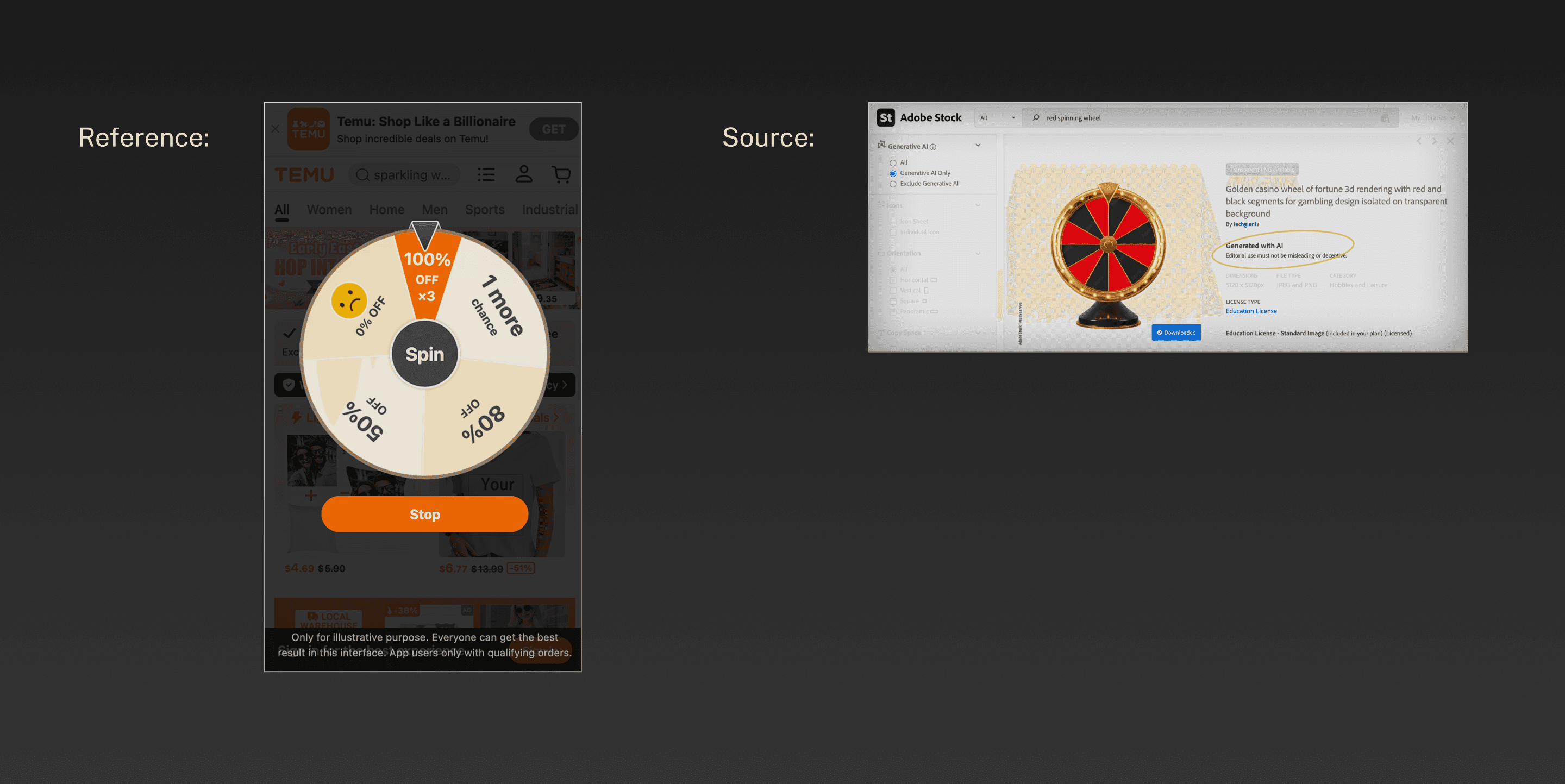
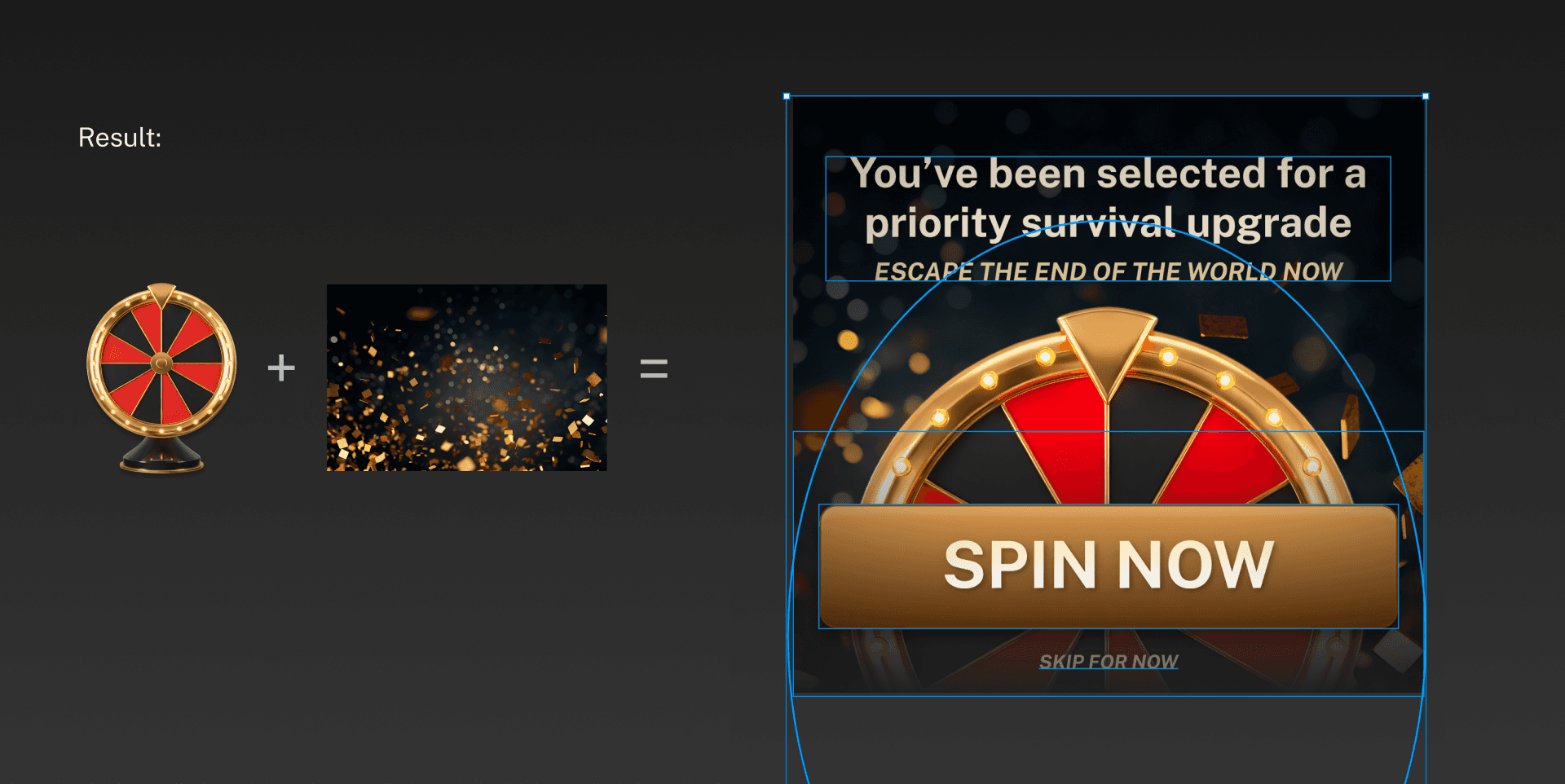
Understanding the negative ramifications of AI-use, including but not limited to exploiting human artists, I set out to exploit AI-generation by collecting pre-generated images and re-configuring it into my own advertisements.
By doing so, I not only built my familiarity with AI-content, but explored what it means to retain agency and ownership as a designer.
I built on marketing tactics that sell our needs in the tones of popular corporate entities.


The Trap: Designed Illusion of Choice
To understand the power of advertisement design, I replicated invasive advertisements using large buttons to manufacture self-serving desires.
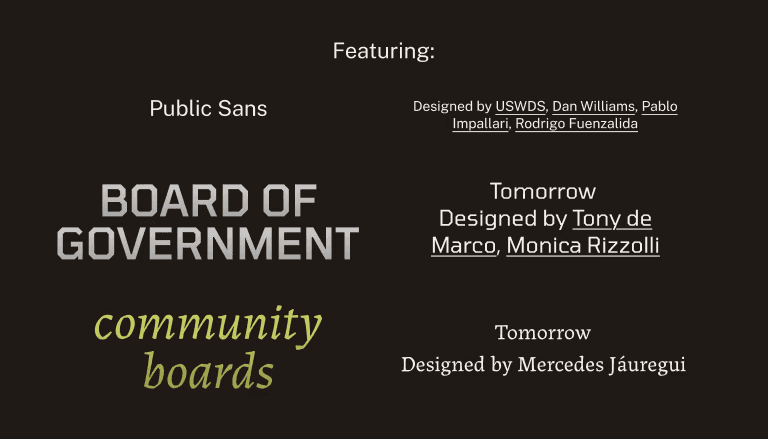
For instance, the Board of Government (BOG) system offers a "deal" on 100 beef rations; satisfying a temporary individual need at a massive, hidden climate cost. The simulation tracks these extractive choices through an environmental cost "cart," revealing how profit-driven "individual choice" accelerates systemic instability.
Is there an Alternative?!
By intentionally closing/rejecting these predatory ads, you uncover the alternative…
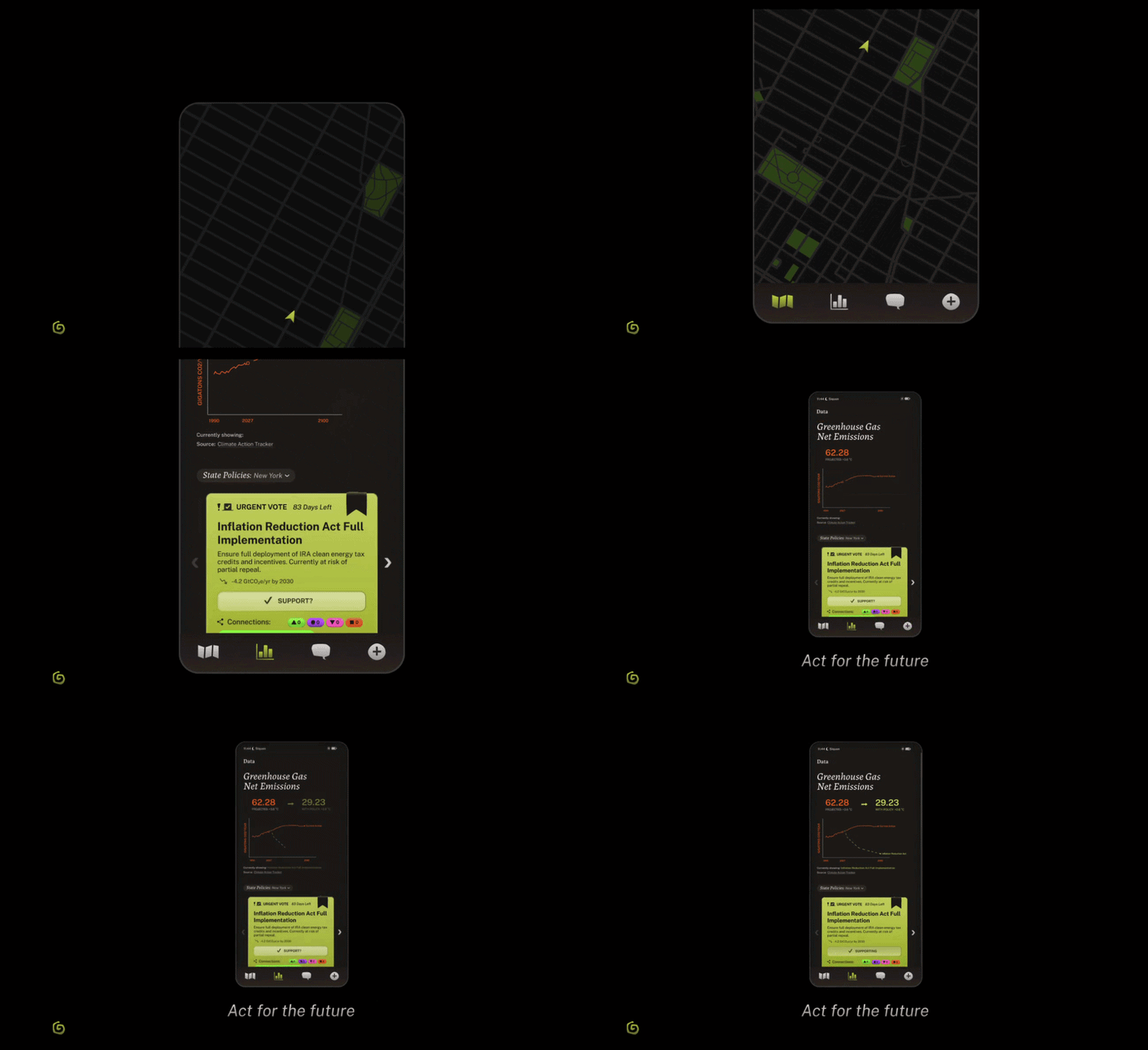
Community Boards: a speculative facilitative network for mutual aid. Inspired by the decentralized intelligence of slime mold, I utilized high-contrast lime accents against a grounded, earth-brown backdrop to represent a non-hierarchical, collective sensing network. Unlike the BOG’s cost-cutting algorithms, this system relies on human agency, where users actively categorize "Offers" and "Requests" to foster genuine connection.

Taking Action
To ground the digital future in the physical reality of the land, the interface integrates Lenape seasons and historical ecological maps to reveal hidden landmarks like the covered Minetta Creek.
The story culminates at the Action Dashboard, where personal commitments, like switching to a plant-based diet, are translated into real-time, animated shifts in CO₂ levels.


Conclusion
By connecting local sensing to global policy changes, the project transforms the user from a passive consumer into an active citizen. It moves the question from "How do I survive?" to the vital, collective goal: "How do we survive?"



About
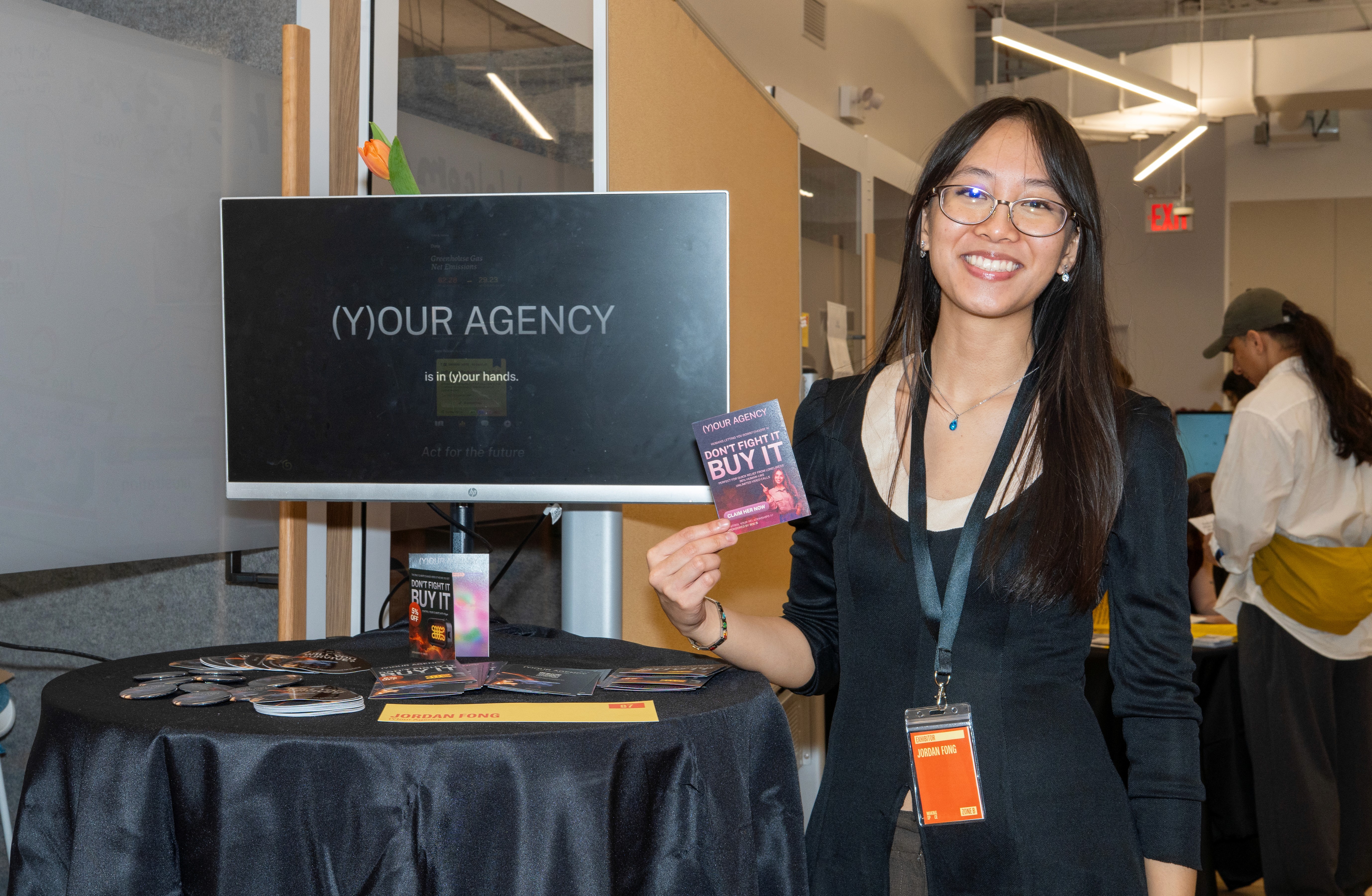
Jordan's goal is to craft powerful designs that not only inform but also connect with audiences, making complex ideas more accessible and actions more impactful.
Outside of graphic design, she loves to take photos with her Fujifilm or her dad's Canon DSLRs. She has also recently been into mixing songs on Spotify and will take song requests to make you a playlist.